


Carpal Tunnel Syndrome: Causes, Symptoms, and Treatment
The eight bones of the wrist form a U-shaped channel — the carpal tunnel — that houses several tendons and the median nerve. The median nerve handles sensation on the palm side of the thumb, index, middle, and half of the ring finger. Compression or irritation of this nerve as it travels through the carpal tunnel produces the condition known as carpal tunnel syndrome.
Carpal tunnel syndrome is the most common nerve entrapment, affecting 3–5% of the general population. It affects women two to three times more often than men, and most often develops in adults between 45 and 60. Risk factors include diabetes, thyroid disease, rheumatoid arthritis, alcoholism, kidney disease, and being short or overweight. Fluid retention during pregnancy is a common cause of carpal tunnel symptoms as well.
Typical causes: Prolonged wrist flexion and repetitive wrist movements — supermarket scanning, keyboard use, carpentry, or assembly line work — are common triggers. Exposure to vibration or cold can aggravate the condition. Symptoms are more common in the dominant hand but frequently affect both.
Typical symptoms:
- Numbness, tingling, or discomfort on the palm side of the thumb, index, middle finger, and half of the ring finger
- Discomfort that can extend toward the elbow
- Symptoms often begin at night or as waking up with numb hands, progressing to a more constant issue over time
- Aggravated by gripping activities — reading, driving, painting
- Early on, symptoms may be relieved by shaking out the hands
- In more established cases, hand weakness can develop
An important note: what’s commonly called “carpal tunnel syndrome” is often something else entirely. Dr. Wilson has written in depth about how conditions that mimic true carpal tunnel entrapment — double crush syndrome, thoracic outlet syndrome, cervical nerve root entrapment, and pronator teres syndrome (median nerve entrapment at the elbow rather than the wrist) — are actually far more common in clinical practice than genuine carpal tunnel entrapment itself. Getting an accurate diagnosis of which condition is actually driving your symptoms matters enormously, since the right treatment differs depending on where the compression is actually occurring — and, in some cases, wrist surgery for presumed carpal tunnel syndrome fails precisely because the true entrapment site was never at the wrist to begin with.
What the Research Shows
A 2018 systematic review (Jiménez Del Barrio et al., Neurología) evaluating 32 randomized controlled trials on conservative treatment for mild-to-moderate carpal tunnel syndrome found evidence supporting several approaches, including splinting — shown to be effective, particularly combined with other non-pharmacological techniques — and manual and soft tissue techniques, which showed good results, though the authors noted the evidence base for manual therapy specifically remains more limited than for splinting. If left untreated, carpal tunnel syndrome can progress to permanent nerve damage, which is why the American Academy of Neurology recommends conservative treatment before considering surgical alternatives in appropriate cases.
How We Treat It
Given how frequently symptoms attributed to “carpal tunnel” actually originate from the neck, shoulder, or forearm rather than the wrist itself, treatment here starts with an accurate evaluation of where the compression is actually occurring — not an assumption based on symptom location alone.
- Chiropractic care addresses joint restriction along the nerve’s path — frequently in the cervical spine, where cervical nerve root entrapment or double crush patterns originate.
- Physical therapy and soft tissue work address the wrist, forearm, shoulder, and neck musculature contributing to nerve compression, along with wrist splinting guidance when appropriate.
- Acupuncture can be a useful adjunct for symptom relief alongside the mechanical treatment above.
- Massage therapy addresses the muscular tension along the forearm and neck that frequently contributes to nerve entrapment at multiple points.
FAQ
Do I actually have carpal tunnel syndrome, or something else? It’s genuinely common for symptoms attributed to carpal tunnel syndrome to originate elsewhere — the neck, shoulder, or forearm. A thorough evaluation, rather than an assumption based on symptom location, is the only reliable way to know which condition is actually driving your symptoms.
Will I need surgery? Not necessarily. Conservative treatment is the recommended first approach for mild-to-moderate cases, and real evidence supports splinting and manual therapy approaches. Surgery becomes a more serious consideration for more severe, unresponsive cases, or when there’s evidence of nerve damage.
How long does treatment take to work? This depends significantly on which condition is actually present — true carpal tunnel entrapment, double crush syndrome, thoracic outlet syndrome, cervical nerve root entrapment, or pronator teres syndrome — and how long it’s been present. We’ll give you a realistic timeline once we’ve determined what’s actually driving your symptoms.
Can carpal tunnel syndrome come back after treatment or surgery? Yes, particularly if the underlying condition wasn’t accurately diagnosed in the first place. This is a common pattern with double crush syndrome and pronator teres syndrome specifically — surgery on the wrist can provide initial relief or none at all, but symptoms persist or return once the actual entrapment site, whether at the elbow, neck, or elsewhere, isn’t addressed.
Is carpal tunnel syndrome preventable? Ergonomic adjustments — proper wrist positioning at a keyboard, avoiding prolonged wrist flexion, and taking regular breaks from repetitive tasks — reduce risk, though some contributing factors (pregnancy, certain medical conditions) aren’t preventable.
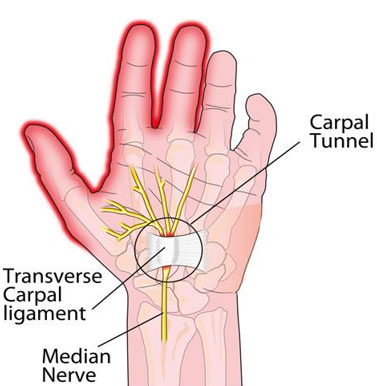
Image on this page provided by ChiroUp.
Coordinated Care, Under One Roof
Chiropractic, physical therapy, acupuncture, and massage therapy are coordinated under one roof with the rest of your treatment plan rather than operating in isolation. Schedule your appointment to get started.