


Knee Pain: Runner’s Knee, Meniscus Injury, and How We Treat It
Runner’s Knee (Patellofemoral Pain Syndrome)
Patellofemoral pain syndrome (PFPS) describes a painful irritation of the cartilage behind your kneecap. Although anyone may be affected, it’s often the result of overuse of the knee in sports that require jumping or running, so we sometimes refer to it as “Runner’s knee.” PFPS is the most common cause of knee pain in the general population, affecting about 25% of adults.
One of the most common causes of PFPS is an imbalance between the muscles that help guide your kneecap in its V-shaped groove at the end of your thigh bone. Repeatedly flexing and extending a misaligned kneecap leads to pain, swelling, and eventually arthritis. Misalignment of the kneecap (patella) is often secondary to problems in the hip and foot, especially weakness of your gluteal muscles or flat feet.
PFPS produces a dull pain behind the kneecap that’s aggravated by prolonged walking, running, squatting, jumping, stair climbing, or arising from a seated position. The pain is often worse when walking downhill or downstairs. Longstanding misalignment can cause damage to the cartilage, resulting in popping, grinding, or giving way.
Conservative care, like the type provided in this office, is successful at relieving symptoms. Initially, it’s important to minimize activities that provoke pain, especially running, jumping, and activities that stress you into a “knock-kneed” position.
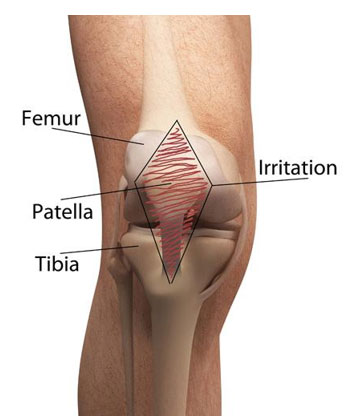
Image on this page provided by ChiroUp.
Meniscus Injury
The meniscus is a piece of tough, smooth, rubbery cartilage in the middle of your knee. Each knee has a meniscus on the inside (medial meniscus) and another on the outside (lateral meniscus). Each meniscus attaches to the top of your shinbone (tibia) and acts as a shock-absorbent guide for your thigh bone (femur), which rests above.
Damage or tears to the meniscus are common, affecting males three or four times more often than females. Tears may occur at any age. In children and adolescents, the menisci are more durable and rubbery, so most injuries are “traumatic,” from a forceful twisting injury. As we age, the meniscus grows weaker, and “degenerative” tears become more likely, often from simple or even unrecognized injuries.
Symptoms depend on the type and severity of damage. Patients sometimes hear a pop or snap at the time of initial injury. Those with acute injuries may have difficulty bearing weight and may develop a limp. Stiffness is a common complaint. Clicking, catching, locking, or giving-way is possible. Meniscus injuries are usually aggravated by movement and become uncomfortable with deep squatting.
Although some meniscus injuries require surgery, most can be treated conservatively with the type of treatment provided in our office. Age roughly correlates with the need for surgery — approximately two-thirds of acute meniscal tears in children and adolescents will require surgery, but only about 1 in 20 patients over 40 will require knee arthroscopy. Surgery is necessary more often in patients who can’t fully bend or straighten their leg, or whose knee locks and gets stuck in one place. Patients who’ve undergone surgical repair of their meniscus are more likely to develop arthritis, and will also benefit from a well-planned home exercise program.
How We Treat Knee Pain
- Chiropractic care addresses mechanical contributors above the knee — hip and pelvic alignment, in particular — that frequently drive patellar tracking problems.
- Physical therapy is the backbone of conservative knee treatment for most presentations: rebuilding gluteal and quadriceps strength, correcting movement patterns, and restoring the joint mobility that mechanical knee pain depends on.
- Massage therapy addresses tightness in the muscles surrounding the knee — particularly the quadriceps, hamstrings, and IT band — that contribute to abnormal tracking and loading.
- Shockwave therapy fills a genuinely useful gap for chronic knee conditions that plateau with standard conservative care — patellar tendinopathy, knee osteoarthritis, and IT band syndrome in particular. We’ve written a full breakdown of shockwave for knee pain, including which conditions respond well and which don’t.
- Laser therapy has real, if contested, evidence behind it for knee osteoarthritis specifically. A 2019 systematic review and meta-analysis (Stausholm et al., BMJ Open) of 22 randomized, placebo-controlled trials found meaningful reductions in pain and disability. We think it’s worth noting honestly that some major clinical guidelines don’t yet recommend it, despite this evidence base — a genuine discordance in the field that other researchers have specifically pointed out. We use it as an adjunct alongside other conservative care, not as a standalone treatment.
Preparing for Surgery: Prehabilitation
If you’re facing knee surgery — total knee replacement or ACL reconstruction, most commonly — starting physical therapy beforehand can genuinely change your outcome, not just your comfort while you wait. A 2022 systematic review with meta-analysis (Journal of Orthopaedic & Sports Physical Therapy) found prehabilitation improved knee functioning both before and within the first year after total knee arthroplasty. Separately, a systematic review of prehabilitation before ACL reconstruction found patients who did prehab reached significantly higher self-reported knee function at both pre-surgery and two years post-surgery, with faster and higher rates of return to sport. If surgery is on your horizon, starting conservative care now, rather than waiting for a post-op referral, is worth a conversation with us.
After Surgery: Post-Surgical Rehabilitation
Whether you’ve had a meniscus repair, ACL reconstruction, or total knee replacement, structured rehabilitation afterward is standard, essential care — not an optional add-on. Post-surgical physical therapy rebuilds the strength, range of motion, and movement patterns that surgery alone doesn’t restore, and it directly affects your long-term outcome, including your risk of developing arthritis down the road. We coordinate with your surgeon’s post-operative protocol rather than treating this in isolation.
FAQ
Do I need surgery for my knee pain? Most knee pain — including the large majority of PFPS cases and many meniscus tears — responds well to conservative care and doesn’t require surgery. Age, the specific injury, and whether your knee locks or you can’t fully bend or straighten it all factor into whether surgery becomes necessary. We’ll be direct with you about which category your presentation falls into.
Is shockwave therapy right for my knee condition? It depends on the specific condition. Shockwave works particularly well for patellar tendinopathy, knee osteoarthritis, and IT band syndrome that hasn’t responded to standard conservative care — but it’s not appropriate for every knee problem, and we’ll tell you honestly if your presentation isn’t a good fit.
Should I start physical therapy before my knee surgery? For many patients, yes — this is genuinely supported by research showing better outcomes for both total knee replacement and ACL reconstruction when patients do structured prehabilitation beforehand. Worth discussing with us if surgery is scheduled or being considered.
How does laser therapy help with knee osteoarthritis? The research shows real reductions in pain and disability for knee OA specifically, though we want to be upfront that not all major guidelines currently recommend it despite that evidence. We use it as one part of a broader conservative approach rather than a standalone fix.
What does post-surgical rehab actually involve? It’s structured, progressive physical therapy tailored to your specific surgery and your surgeon’s protocol — rebuilding strength, restoring range of motion, and retraining movement patterns. This isn’t optional recovery; it materially affects your long-term function and your risk of future joint problems.
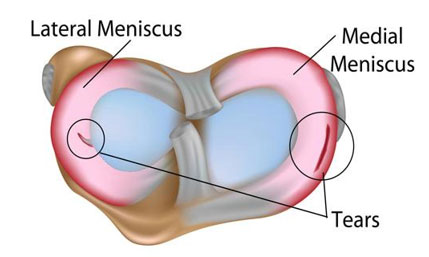
Image on this page provided by ChiroUp.
Coordinated Care, Under One Roof
Chiropractic, physical therapy, acupuncture, and massage therapy are coordinated under one roof with the rest of your treatment plan rather than operating in isolation. Schedule your appointment to get started.