


Little League Elbow: Causes, Symptoms, and How It’s Treated
Little League elbow — medically known as medial epicondyle apophysitis — is the most common overuse injury in youth baseball. It affects the growth plate on the inner side of the elbow (the medial epicondyle), the attachment point for the forearm muscles used in throwing.
Why young elbows are vulnerable: In a child’s skeleton, the growth plate is the weakest point in the entire elbow structure — roughly five times weaker than the ligament (the ulnar collateral ligament, or UCL) that stabilizes the joint. The repetitive, forceful stress of throwing — particularly the valgus (inward-bending) force generated during the late cocking phase of a pitch — pulls directly on that growth plate. In an adult, that same force would stress the ligament instead. In a child, the growth plate gives first.
Little League elbow most often affects pitchers ages 9–14, though any young athlete who throws frequently — including position players, and athletes in other overhead sports like volleyball, water polo, and football — can develop it. Studies estimate 20–40% of youth pitchers ages 9–12 experience throwing-related overuse injuries, rising to 30–50% in adolescence.
Symptoms
- Pain on the inner side of the elbow, typically during or after throwing
- Decreased throwing velocity or accuracy
- Elbow stiffness, particularly in the morning or after rest
- Swelling or a visible bump on the inner elbow in more established cases
- Difficulty fully straightening the elbow
Symptoms usually develop gradually — after an increase in innings, pitch count, or insufficient rest — rather than appearing suddenly from one throw. Tell us right away if your child has fever, unexplained weight loss, or night sweats, as these could indicate something other than an overuse injury.
Treatment: Rest Is Not Optional
The foundation of treatment is rest from throwing — genuinely stopping, not just reducing volume. Most sources, including StatPearls’ clinical reference, recommend a minimum of 4–6 weeks of complete rest from throwing, with return to throwing only once the elbow has full, pain-free range of motion. For the typical case — apophysitis without a displaced fracture — gentle chiropractic care during and after the rest period, combined with ice and a properly sequenced return-to-throw progression, is the standard approach.
A smaller number of more severe cases involve an actual avulsion fracture of the growth plate rather than simple irritation. These cases are managed differently — typically with a period of casting or bracing, and physical therapy is specifically indicated afterward, once bony union is confirmed, to safely rebuild strength in the forearm flexor-pronator muscles. We’ll be direct with you about which category your child’s presentation falls into.
This is the part parents and young athletes find hardest to accept, and it’s also the most important: throwing through elbow pain doesn’t build toughness, it risks converting a growth plate injury into a fracture or long-term joint instability. A young athlete who “pitches through it” is the athlete most likely to end up out for the season, or with a lasting problem, rather than the athlete who takes the 4–6 weeks now.
Once your child is pain-free with full range of motion, we build a gradual return-to-throw program — a structured progression that reintroduces throwing volume and intensity step by step. Rushing this step is one of the most common causes of re-injury.
Beyond Rest: Why the Same Workload Injures One Pitcher and Not Another
Rest and pitch count management address the acute injury and reduce the raw volume of stress on a young pitcher’s elbow. But there’s another layer worth understanding: why does one pitcher’s elbow tolerate a given workload while another’s breaks down under the same volume?
It’s worth being clear about what this is not: it’s not a pitching mechanics lesson, and it’s not a substitute for good coaching on delivery and technique — that’s genuinely valuable, but it’s a different thing. What we’re looking at is neuromuscular, not technical: whether certain muscles that should be stabilizing the shoulder, trunk, and hip during a throw are actually switched on and doing their job, and whether other muscles have become chronically overactive and are compensating for that gap.
Every body has a natural asymmetry to how the muscles on the two sides work — some become overused and tight, while others go underused and effectively “forget” how to activate on demand, even though they’re not weak in the sense of needing to be strengthened. When a stabilizing muscle isn’t turning on properly, the joints downstream — often the elbow, in an overhead throwing motion — end up absorbing load that muscle should have controlled. Strength training alone doesn’t fix this, because the problem isn’t a lack of strength; it’s a lack of appropriate neurological activation at the right time in the movement.
Dr. Wilson has completed the full Postural Restoration Institute curriculum and sits for the Postural Restoration Certified (PRC) examination in December 2026. In his clinical experience treating baseball players — from Little League age through more advanced levels — this kind of evaluation, identifying which muscles are overactive versus underactive and restoring proper activation, has produced good results for both elbow and shoulder issues in throwing athletes. It’s also worth noting this isn’t a “pitching only” fix: the same muscle activation patterns affect posture, breathing, and movement in everyday life, not just on the mound — so addressing them benefits the athlete well beyond their next start.
Prevention: Pitch Counts and Rest Days
The single best tool for preventing Little League elbow is following age-appropriate pitch count and rest day guidelines. These are the official Pitch Smart limits developed by USA Baseball, MLB, and the American Sports Medicine Institute, and followed by Little League, PONY, and most youth baseball organizations:
| Age | Daily Max Pitches | 1 Day Rest | 2 Days Rest | 3 Days Rest | 4 Days Rest |
|---|---|---|---|---|---|
| 7–8 | 50 | 21–35 | 36–50 | — | — |
| 9–10 | 75 | 21–35 | 36–50 | 51–65 | 66+ |
| 11–12 | 85 | 21–35 | 36–50 | 51–65 | 66+ |
| 13–14 | 95 | 21–35 | 36–50 | 51–65 | 66+ |
| 15–16 | 95 | 31–45 | 46–60 | 61–80 | 81+ |
| 17–18 | 105 | 31–45 | 46–60 | 61–80 | 81+ |
A pitcher should never appear as a pitcher on three consecutive days, regardless of pitch count. Youth pitchers should also take at least 4 months off from competitive throwing every year, with 2–3 of those months being continuous, and avoid pitching for multiple teams in the same season — a common way pitch counts get quietly exceeded even when each individual team follows the rules.
FAQ
How do I know if my child has Little League elbow? Watch for elbow pain during or after throwing, decreased throwing velocity or accuracy, morning stiffness, or visible swelling on the inner elbow. A professional evaluation is important to confirm the diagnosis and rule out a more serious injury like an avulsion fracture.
Is chiropractic care safe for children with this injury? Yes. Gentle, age-appropriate chiropractic adjustments and soft tissue work are the mainstay of conservative care for typical apophysitis without a fracture, but none of it replaces the rest itself — rest from throwing is the non-negotiable foundation of treatment regardless of what else is included in the plan.
Will my child need physical therapy? Usually not for the typical presentation — rest, gentle chiropractic care, and a properly sequenced return-to-throw progression are the standard approach. Physical therapy becomes specifically relevant for the smaller number of more severe cases involving an avulsion fracture, where it’s used after a period of casting or bracing to safely rebuild strength once the bone has healed.
Can my child continue playing other positions while resting from pitching? Sometimes, depending on the position and how much throwing it involves. We tailor recommendations to each athlete, but any position requiring repetitive overhead throwing (catcher, shortstop, third base) generally needs the same rest as pitching.
What’s this evaluation for overactive and underactive muscles, and does my child need one? It’s not a pitching mechanics lesson — that’s valuable too, but it’s a different thing, and a pitching coach is the right person for that. This is a neuromuscular evaluation: checking whether certain stabilizing muscles are properly “switched on” during movement, versus other muscles that have become overactive and are compensating for that gap. It’s not necessary for every case, but for athletes with recurring elbow or shoulder issues, it can identify a pattern that pitch count management alone doesn’t address — and one that affects posture and movement in everyday life, not just pitching.
What can I do at home to support recovery? Ice the elbow after any activity, encourage rest from all throwing (not just organized team throwing — backyard catch counts too), and follow any home exercises we recommend once pain-free range of motion returns. Adequate sleep and nutrition support tissue healing throughout.
How can we prevent this from happening again? Following the Pitch Smart pitch count and rest day guidelines above is the single most effective prevention strategy. Beyond that: proper throwing mechanics, avoiding single-sport specialization at a young age, taking the recommended months off from throwing each year, and never allowing a child to pitch for multiple teams in the same season without tracking combined pitch counts.
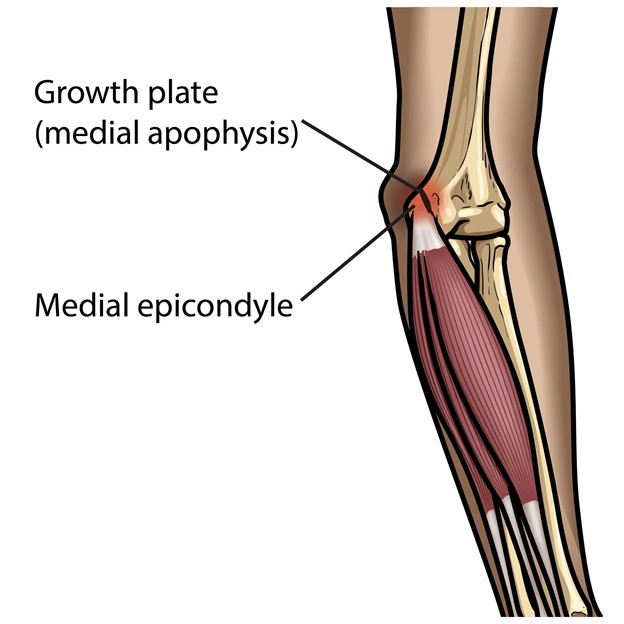
Image on this page provided by ChiroUp.
Coordinated Care, Under One Roof
Chiropractic, physical therapy, acupuncture, and massage therapy are coordinated under one roof with the rest of your treatment plan rather than operating in isolation. Schedule your appointment to get started.