


TMJ / Temporomandibular Disorder: What It Is and How We Treat It
Temporomandibular disorder (TMD) describes a group of problems causing pain in the temporomandibular joint (TMJ) — the joint connecting your jaw to your skull. These problems can originate in the muscles around the joint, the disc within the joint, or the joint structure itself. Imbalances between the muscles that open and close your jaw are the most common underlying driver.
TMD affects up to 25% of the population at some point, most commonly in adults 20–50 years old, and is 2–3 times more common in women. You’re also roughly three times more likely to develop TMD if you’ve had a whiplash injury.
Typical symptoms: Jaw clicking, limited mouth opening, jaw locking, and pain — typically described as an ache in front of the ear canal, though it can refer to the face, head, neck, or shoulders. Chewing and eating usually make symptoms worse, and TMD patients frequently also deal with headaches.
Common contributors: Jaw clenching or teeth grinding (especially at night), poor posture, and emotional stress are all frequent drivers. A custom-fitted mouthguard can help minimize nighttime grinding, and simple changes — avoiding gum and rubbery foods, limiting excessive talking, sleeping in a neutral position — reduce ongoing irritation while treatment takes effect.
What the Research Shows
Manual therapy directed at the jaw and surrounding structures has real evidence behind it. A 2022 systematic review (Asquini et al., Journal of Oral Rehabilitation) found that craniomandibular manual therapy produced significant improvement in both pain and maximum mouth opening in the mid-term across the trials reviewed — though the authors were honest that the overall quality of evidence was still low, given small sample sizes in the available studies. A more recent meta-analysis on conservative and minimally invasive interventions for TMD similarly found manual therapy techniques — including post-isometric relaxation and myofascial release — reduce muscle hypertonicity and improve mandibular movement without introducing any irreversible structural changes, and current clinical guidelines recommend conservative care as the first-line approach before considering more invasive options.
How We Actually Approach TMJ Here
This isn’t a single-provider, single-technique condition in our office — we have three practitioners who each bring something different to it, and we use whichever combination fits what’s actually driving your symptoms:
- Naomi Hooper, LMT is specifically certified in TMJ manual therapy and works directly on the muscles most commonly involved — the masseter, temporalis, and pterygoids — to reduce the muscle tension and trigger points that drive jaw pain.
- Dr. Wilson approaches TMD from a Postural Restoration Institute (PRI) perspective, looking at how whole-body postural and breathing patterns can contribute to jaw tension, and uses dry needling directly on the affected muscles. For cases that don’t respond to these approaches, shockwave therapy is also an option.
- Kelly Brown Gross, PT brings a physical therapy approach — addressing jaw mobility, muscle coordination, and the postural and cervical spine factors that often accompany TMD.
For the smaller number of cases that need dental-side intervention — occlusal issues, a nightguard fitting, or structural joint problems beyond what conservative care addresses — we work with a TMJ-focused dentist in the area we trust and refer to directly. This is genuinely uncommon; most TMD resolves with the conservative approaches above.
FAQ
Do I need a night guard? Not always, but it’s a reasonable first step for patients whose primary driver is nighttime clenching or grinding. A custom-fitted guard reduces the mechanical strain on the joint while we address the underlying muscle tension and postural factors.
Is TMJ pain related to my neck and posture? Often, yes. Forward head posture and cervical spine restriction change how the jaw muscles have to work to keep your bite aligned, which is part of why Dr. Wilson evaluates the whole postural picture, not just the jaw itself, and why Kelly’s physical therapy approach frequently addresses the neck alongside the jaw.
What if manual therapy and dry needling don’t fully resolve it? For cases that don’t respond to the conservative approaches we start with, shockwave therapy is an option we offer in-house. For the smaller number of cases that are genuinely dental or structural in nature, we refer to a TMJ-focused dentist we trust in the area.
How long does treatment typically take? Many patients notice improvement within a handful of visits, particularly when muscle tension and trigger points are the primary driver. More chronic or multifactorial cases — especially those involving significant postural or cervical spine contributions — take longer to fully resolve.
Can stress make TMD worse? Yes. Emotional stress is a well-documented contributor to jaw clenching and muscle tension, and addressing it — alongside the physical treatment — is often part of a complete plan for patients whose symptoms flare with stress.
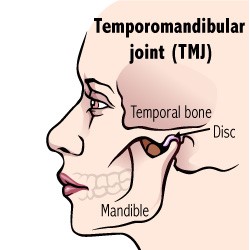
Image on this page provided by ChiroUp.
Coordinated Care, Under One Roof
Chiropractic, physical therapy, acupuncture, and massage therapy are coordinated under one roof with the rest of your treatment plan rather than operating in isolation. Schedule your appointment to get started.