


Ankle Sprains: What’s Actually Changed in How They’re Treated
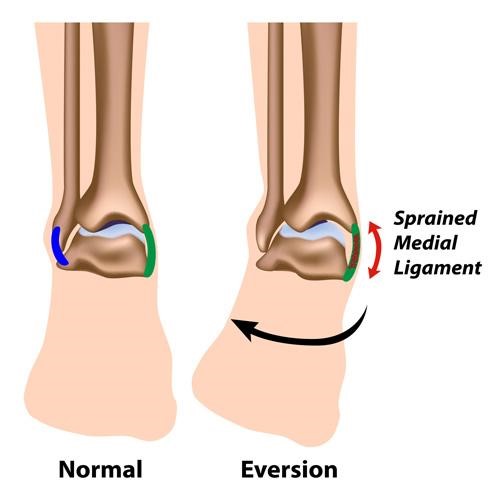
Ligaments are made of many individual fibers bundled into a strong fibrous band that holds your bones together. Like a rope, when a ligament is stretched too far, it can fray or tear — that tearing is what we call a sprain. Ankle sprains are the most common soft-tissue injury, affecting up to 20% of active people at some point in their life, and most occur from rolling the ankle inward.
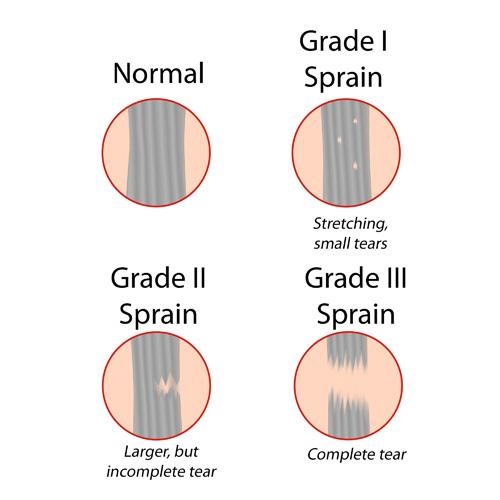
Sprains are graded by severity:
- Grade 1 — The ligament has been painfully stretched, but no fibers have torn.
- Grade 2 — Some, but not all, of the ligament’s fibers have torn.
- Grade 3 — All of the ligament’s fibers have torn, and the ligament can no longer protect the joint.
The Advice Has Changed — And It Matters
If you’ve had an ankle sprain before, you were probably told to follow RICE: Rest, Ice, Compression, Elevation. Current evidence no longer supports this as the standard. A 2012 editorial in the British Journal of Sports Medicine (Bleakley, Glasgow, and MacAuley) proposed replacing RICE with POLICE: Protection, Optimal Loading, Ice, Compression, Elevation. The key change is swapping “Rest” for “Optimal Loading” — the evidence shows that prolonged immobilization actually impairs tissue healing at the cellular level, while early, appropriately-dosed movement promotes better collagen structure and faster functional recovery.
This isn’t a minor tweak. A 2019 paper in the Journal of Athletic Training (McKeon and Donovan) went further, calling for an evidence-based paradigm shift in how ankle sprains are rehabilitated altogether — arguing that too many patients are managed with outdated approaches that leave them prone to chronic ankle instability. For Grade 1 and Grade 2 sprains specifically, current clinical practice guidelines recommend early mobilization and functional support rather than extended rest, with a strong (Level 1, Category A) evidence rating behind that recommendation.
What this means practically: if you’re icing appropriately and protecting the joint from re-injury, but otherwise sitting still and waiting for it to heal, you’re likely working against your own recovery. The goal is controlled movement as soon as pain allows, not complete rest.
Why the Same Ankle Keeps Getting Sprained
Recurrence is common with ankle sprains, and it’s not just bad luck. A meaningful driver, often missed, is the same hip abductor weakness pattern that shows up in several other lower-body conditions we treat. When the gluteus medius and other hip abductors aren’t stabilizing the pelvis and leg properly, the hip drifts inward during walking and running, the knee follows, and the foot rolls inward (pronates) to compensate — placing extra strain directly on the ankle’s lateral ligaments with every step. Addressing hip control, not just the ankle itself, is often the piece that actually breaks a recurring pattern.
How We Treat It
- Chiropractic care addresses joint restriction in the ankle and foot, along with the hip and pelvic mechanics that frequently contribute to recurrent sprains.
- Physical therapy rebuilds proprioception (your joint’s sense of position), ankle and hip strength, and balance — all of which are reliably disrupted by an ankle sprain and remain disrupted long after the pain resolves if not specifically retrained.
- Acupuncture is a useful option for pain modulation in the acute phase, particularly for patients who want to minimize reliance on medication while staying mobile.
- Laser therapy can support tissue healing as an adjunct alongside the mechanical treatment above.
- Shockwave therapy is an option worth considering for chronic ankle pain that persists after recurrent sprains — cases involving ongoing ligamentous instability or lingering pain that hasn’t resolved with standard conservative care. This is a genuinely newer application than shockwave’s more established uses (like plantar fasciitis or calcific tendinitis), and we want to be upfront that the research base specifically for chronic ankle ligament pain is still developing, though the biological rationale — promoting collagen remodeling and tissue healing in chronically irritated ligamentous tissue — is sound, and it’s a recognized indication among shockwave providers nationally.
- Home care — appropriate protection (bracing or taping in the early phase), ice, and a progressive loading program tailored to your grade of sprain and stage of healing.
Surgery is rarely necessary for ankle sprains, even Grade 3 injuries — the large majority resolve with appropriate conservative care.
FAQ
Should I still ice my ankle sprain? Yes — ice remains part of the current recommended approach (it’s the “I” in POLICE), but it’s paired with early, controlled movement rather than strict rest. The old advice to simply rest and wait it out is what’s changed, not the value of icing itself.
How long should I stay off my ankle after a sprain? This depends on the grade of your sprain, but current evidence favors early mobilization over prolonged rest for Grade 1 and Grade 2 sprains specifically. Complete immobilization for an extended period can actually slow your recovery. We’ll give you a specific, staged plan based on your evaluation.
Why does my ankle keep getting sprained even after it heals? Recurrent ankle sprains are often driven by two things that don’t resolve on their own: proprioceptive deficits (your ankle’s sense of position in space, which sprains disrupt) and hip abductor weakness, which changes how load travels down your leg and places extra strain on the ankle’s ligaments. Both are addressable with targeted rehabilitation, but they require specific attention — they don’t just improve because the initial pain went away.
Do I need an X-ray for my ankle sprain? Not always. Most ankle sprains are diagnosed clinically through history and physical examination. Imaging becomes more important if there’s concern for fracture (significant swelling, inability to bear weight, tenderness directly over the bone) or if symptoms aren’t following the expected recovery course.
Is shockwave therapy an option for chronic ankle pain? Yes, particularly for pain that persists after recurrent sprains or involves ongoing ligamentous instability that hasn’t resolved with standard conservative care. We’ll be honest that this is a newer application of shockwave than some of its more established uses, and the research specifically on chronic ankle ligament pain is still developing — but it’s a recognized indication, and the biological rationale for promoting healing in chronically irritated tissue is sound.
When can I return to sports or running after an ankle sprain? This varies by grade and by how you respond to rehabilitation, but it’s driven by function — regaining full strength, balance, and confidence in the joint — not just by how much time has passed. Returning too early, before proprioception and strength are restored, is one of the main risk factors for re-injury.
Coordinated Care, Under One Roof
Chiropractic, physical therapy, acupuncture, and massage therapy are coordinated under one roof with the rest of your treatment plan rather than operating in isolation. Schedule your appointment to get started.