


Plantar Fasciitis and Heel Spurs: What’s Actually Causing Your Pain
The plantar fascia is a thick, fibrous band of tissue running from the underside of your heel to the ball of your foot, supporting the arch with every step. Plantar fasciitis is a painful irritation of this tissue, most often from chronic overstretching and microscopic tearing at its attachment point on the heel.
Heel spurs and plantar fasciitis are commonly confused, but they’re not the same thing — and heel spurs don’t actually cause the pain. A heel spur is a bony growth that can develop on the heel bone over time, often in people who also have plantar fasciitis, but research and major orthopedic guidance are clear that the spur itself isn’t what’s generating your pain. Some people have significant heel spurs with no pain at all; others have severe plantar fasciitis pain with no spur present. The plantar fascia irritation is the actual problem regardless of whether a spur is present.
Typical symptoms:
- Pain in the heel or arch, worst with the first steps after a period of inactivity — classically first thing in the morning
- Pain that often eases somewhat after walking, then returns after prolonged standing or at the end of the day
- In more established cases, pain that persists throughout the day, even at rest
- Tenderness when pressing directly on the heel
- Tight calf and hamstring muscles are common alongside the condition
Left untreated, plantar fasciitis can be a frustrating, prolonged condition — sometimes lasting well over a year. The good news: more than 90% of people improve with nonsurgical treatment, and surgery is reserved for the small minority who don’t respond after a genuine trial of conservative care.
What the Research Shows
A 2017 systematic review with meta-analysis (Salvioli, Guidi, and Marcotulli, published in The Foot) evaluated conservative, non-pharmacological treatments for plantar heel pain across the available randomized controlled trials. Combined conservative approaches — including stretching, manual therapy, and orthotic support — showed meaningful, evidence-supported benefit for reducing pain, reinforcing that a multimodal approach tends to outperform any single intervention used alone.
For chronic cases that haven’t responded to standard conservative care, shockwave therapy has substantial evidence behind it. Chronic plantar fasciitis — present for more than three months — often becomes a degenerative condition rather than a primarily inflammatory one, which is part of why standard anti-inflammatory approaches stop working as well over time. We’ve written a full breakdown of shockwave therapy for plantar fasciitis, including why patients who’ve already tried cortisone injections without lasting relief are actually among the best candidates for this approach.
How We Treat It
- Chiropractic care addresses foot, ankle, and lower-extremity joint mechanics contributing to abnormal loading on the fascia.
- Physical therapy builds a structured stretching and strengthening program targeting the plantar fascia, calf, and foot intrinsic muscles — the components with the most consistent evidence behind them.
- Massage therapy addresses calf and foot muscle tightness that contributes to increased fascial tension.
- Shockwave therapy is a strong option for chronic, stubborn cases, including those that haven’t responded to cortisone injections.
FAQ
Do I need to have my heel spur removed? Almost never. Heel spurs themselves don’t cause the pain associated with plantar fasciitis — treating the fascia, not the spur, is what actually resolves symptoms. Spur removal surgery is rarely indicated.
Should I stretch if it hurts to walk in the morning? Yes, gentle stretching of the calf and plantar fascia is a core part of treatment, though timing and technique matter. We’ll guide you on the right approach for your specific stage of recovery.
How long does plantar fasciitis take to heal? This varies significantly, but many people see meaningful improvement within several weeks to a few months of starting a properly structured conservative program. Chronic, longstanding cases can take longer, particularly if the tissue has undergone degenerative changes.
Is shockwave therapy right for me? It’s a particularly strong option for chronic cases — those present for more than three months, or cases that haven’t fully responded to standard stretching, orthotics, and manual therapy, including prior cortisone injections that didn’t provide lasting relief.
Will I need surgery? Very unlikely. More than 90% of people with plantar fasciitis improve with nonsurgical treatment. Surgery is reserved for the small percentage of cases that don’t respond after a genuine trial of conservative care, typically over many months.
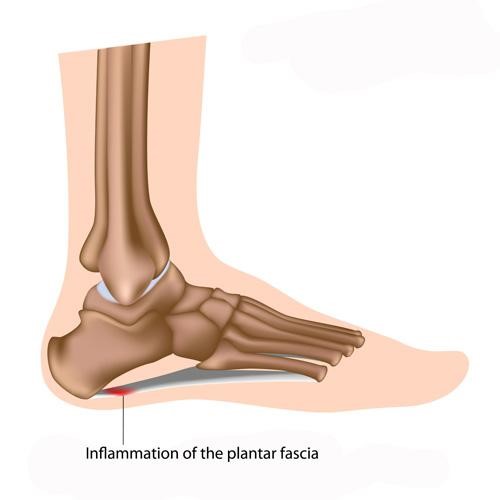
Image on this page provided by ChiroUp.
Coordinated Care, Under One Roof
Chiropractic, physical therapy, acupuncture, and massage therapy are coordinated under one roof with the rest of your treatment plan rather than operating in isolation. Schedule your appointment to get started.