
Shockwave Therapy for Plantar Fasciitis: What the Research Shows and What to Expect
By Dr. Matthew Wilson, DC, FIACA | Ashworth Chiropractic, Physical Therapy & Acupuncture | West Des Moines, Iowa
Plantar fasciitis is one of the most common — and most frustrating — musculoskeletal conditions we treat. If you’re dealing with sharp heel pain first thing in the morning, or pain that returns every time you’ve been on your feet too long, you know exactly what we mean.
Most people try the standard path: stretching, rest, orthotics, cortisone injections, maybe a boot. And for some, those approaches are enough. But for a significant portion of patients, the pain persists for months or even years despite doing everything they were told to do.
That’s where shockwave therapy comes in — and the clinical evidence behind it for plantar fasciitis is some of the strongest in all of musculoskeletal medicine.
What Is Plantar Fasciitis and Why Does It Become Chronic?
The plantar fascia is a thick band of connective tissue that runs along the bottom of your foot, connecting your heel bone to your toes. It absorbs impact, supports your arch, and helps you push off with every step.
Plantar fasciitis occurs when this tissue becomes inflamed, irritated, or microscopically torn — usually from repetitive stress, sudden increases in activity, prolonged standing, or biomechanical factors like flat feet or tight calves.
Here’s the problem: the plantar fascia has poor blood supply. That means it heals slowly under the best of circumstances. When the injury becomes chronic — meaning it has been present for more than three months — the tissue often undergoes degenerative changes rather than true inflammation. The body stops actively trying to repair it. Collagen breaks down. The tissue becomes disorganized. Standard anti-inflammatory treatments stop working because inflammation is no longer the primary driver of the pain.
This is precisely the scenario that shockwave therapy was designed to address.
💡 Key distinction: Chronic plantar fasciitis is not primarily an inflammatory condition — it is a degenerative one. This is why cortisone injections often provide only temporary relief, and why treatments that stimulate biological repair (like shockwave therapy) tend to produce more durable outcomes.
Shockwave Therapy for Plantar Fasciitis
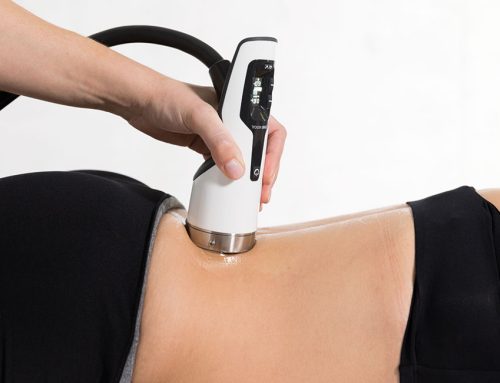
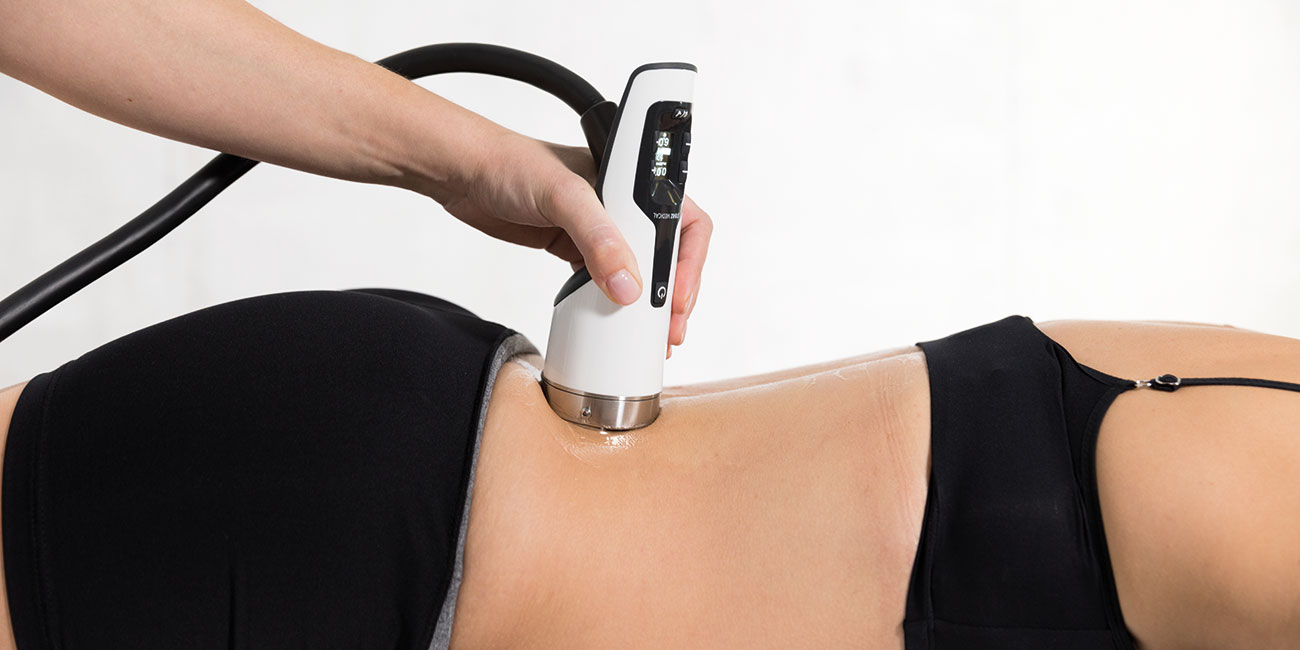
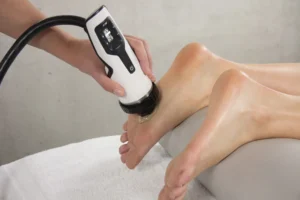
Shockwave therapy works by delivering high-energy acoustic waves to a precise focal point in the damaged tissue. For plantar fasciitis, the applicator is placed against the heel and the waves are directed to the plantar fascia insertion and surrounding tissue.
The biological effects are well-documented:
- Breaks down calcifications and chronic scar tissue within the plantar fascia
- Stimulates neovascularization — the formation of new blood vessels — restoring circulation to tissue that has become degenerative
- Triggers collagen production and tissue remodeling, replacing disorganized tissue with structurally sound repair
- Reduces substance P, the primary neuropeptide responsible for chronic pain signaling in the area
- Activates stem cell recruitment to the site, accelerating the biological repair process
In plain terms: shockwave therapy does not mask the pain. It restores the biological conditions necessary for the plantar fascia to actually heal.
What the Clinical Research Shows
The evidence base for shockwave therapy in plantar fasciitis is substantial. Dr. Amol Saxena, DPM — one of the leading sports medicine podiatrists in the country — has said publicly that ESWT has the highest level of clinical evidence of any treatment used for plantar fasciitis. Here is what the peer-reviewed literature shows:
Systematic Review — 658 Patients, 11 Randomized Controlled Trials
A 2021 systematic review published in Disability and Rehabilitation (Melese et al.) analyzed 11 randomized controlled trials covering 658 patients with chronic plantar fasciitis. The review found that ESWT produced beneficial effects on both pain and foot function, with no significant adverse effects reported across the studies. The authors concluded that ESWT is a promising and effective rehabilitation intervention for chronic plantar fasciitis and a valid alternative to conventional management.
Melese H, et al. Disability and Rehabilitation. 2021;44(18):5007-5014. DOI: 10.1080/09638288.2021.1928775
Head-to-Head vs. Traditional Treatment
Across multiple randomized controlled trials, ESWT has been compared directly to conventional conservative treatment — including physical therapy, stretching programs, heel padding, orthotics, and cortisone injection. The consistent finding is that shockwave therapy produces significantly greater and more durable pain reduction than conservative measures alone, particularly in patients with chronic presentations that have not responded to initial treatment.
Patients who had failed conventional treatment for six months or more and were considered surgical candidates showed clinically meaningful improvement following ESWT — avoiding surgery entirely in a significant proportion of cases. We find that patients who decide to do ESWT have even better outcomes by combing it with physical therapy or chiropractic care to take care of the underlying biomechanical issues that caused the heel pain to begin with.
CuraMedix / Storz Medical Clinical Data
CuraMedix, the US distributor for Storz Medical — whose Duolith SD1 Ultra we use at Ashworth Chiropractic — reports an over 80% patient satisfaction rate across treated musculoskeletal conditions, consistent with the peer-reviewed literature for plantar fasciitis specifically. The device used in the most widely cited clinical trials for plantar fasciitis is the Storz platform.
★ What the research consistently shows across plantar fasciitis studies:
- Significant reduction in heel pain, particularly first-step morning pain
- Improved foot function and walking ability
- Durable results — improvements maintained at 3, 6, and 12-month follow-up
- No significant adverse effects or complications
- Effective even in patients who had failed multiple prior treatments
Why Shockwave Outperforms Cortisone Injections for Chronic Cases
Cortisone injections are widely used for plantar fasciitis and can provide meaningful short-term relief. The problem is that they do not address the underlying tissue degeneration — they suppress inflammation temporarily without promoting repair.
In chronic plantar fasciitis, where the dominant pathology is degenerative rather than inflammatory, cortisone’s mechanism of action becomes less relevant. Repeated injections are associated with plantar fascia rupture, fat pad atrophy, and weakening of the tissue that supports the heel.
Shockwave therapy, by contrast, promotes actual tissue repair. It does not weaken the fascia — it stimulates its regeneration. For patients who have already had one or more cortisone injections without lasting relief, shockwave therapy is typically the recommended next step before considering more invasive options.
What to Expect at Ashworth Chiropractic
At Ashworth Chiropractic, we use the Storz Medical Duolith SD1 Ultra — true focused shockwave, not radial. The distinction matters: focused shockwave delivers energy to a precise point at depth in the plantar fascia, rather than dispersing across the surface of the foot. This is why the clinical literature was largely built on focused ESWT devices, and why the outcomes are consistently stronger.
Here is what your shockwave treatment for plantar fasciitis looks like at our clinic:
- Initial evaluation to assess your specific presentation, duration of symptoms, prior treatments, and goals
- 3 to 5 focused shockwave sessions, typically spaced 1 to 2 weeks apart
- Each session is 5 to 15 minutes — no anesthesia, no downtime, no recovery period
- Most patients notice reduced morning pain and improved function within the first 2 to 3 sessions
- Shockwave is often combined with chiropractic or physical therapy to address contributing biomechanical factors
We do not sell packages. You pay per session and we assess your progress at each visit.
Common Questions About Shockwave for Plantar Fasciitis
How long have I had to have plantar fasciitis before shockwave is appropriate?
Shockwave therapy is most effective for chronic plantar fasciitis — generally defined as symptoms present for three months or longer that have not resolved with conservative care. If you are earlier in the course of the condition, stretching, physical therapy, and activity modification should be tried first. We’ll discuss this at your evaluation.
Will my insurance cover shockwave therapy?
Most insurance carriers in the United States do not currently cover ESWT. We are transparent about this upfront. At $200 per session with most patients needing 3 to 5 sessions, many patients find it significantly more cost-effective than ongoing treatment, repeated injections, or surgery.
What if I’ve already had cortisone injections?
Prior cortisone injections do not disqualify you from shockwave therapy. In fact, patients who have had one or more injections without lasting relief are among the best candidates for ESWT — it addresses what the injection could not.
Can shockwave therapy be used alongside physical therapy or other modalities?
Yes — and at Ashworth Chiropractic, it often is. Kelly Brown Gross, PT, MPT, WCS provides physical therapy that addresses the biomechanical factors contributing to plantar fasciitis, while shockwave therapy stimulates healing in the tissue itself. The combination is more effective than either alone.
Learn More about Shockwave Therapy and the many conditions it can treat.
Clinical References
The following peer-reviewed studies were retrieved from PubMed and cited in this article. All DOIs link to the original published research.
- Melese H, Alamer A, Getie K, Nigussie F, Ayhualem S. Extracorporeal shock wave therapy on pain and foot functions in subjects with chronic plantar fasciitis: systematic review of randomized controlled trials. Disability and Rehabilitation. 2021;44(18):5007-5014. DOI: https://doi.org/10.1080/09638288.2021.1928775
- Herber A, et al. Platelet rich plasma therapy versus other modalities for treatment of plantar fasciitis: A systematic review and meta-analysis. Foot and Ankle Surgery. 2024;30(4):285-293. [Referenced for comparative outcomes between ESWT and other modalities.] DOI: https://doi.org/10.1016/j.fas.2024.02.004
About the Author
Dr. Matthew Wilson, DC, FIACA, CCWP is the owner and lead clinician at Ashworth Chiropractic, Physical Therapy & Acupuncture in West Des Moines, Iowa. He is a Palmer College of Chiropractic honors graduate with advanced certifications in Graston Technique, Postural Restoration, functional medicine, acupuncture, laser therapy, and dry needling. He selected the Storz Medical Duolith SD1 Ultra for Ashworth Chiropractic after extensive evaluation of the shockwave market.