

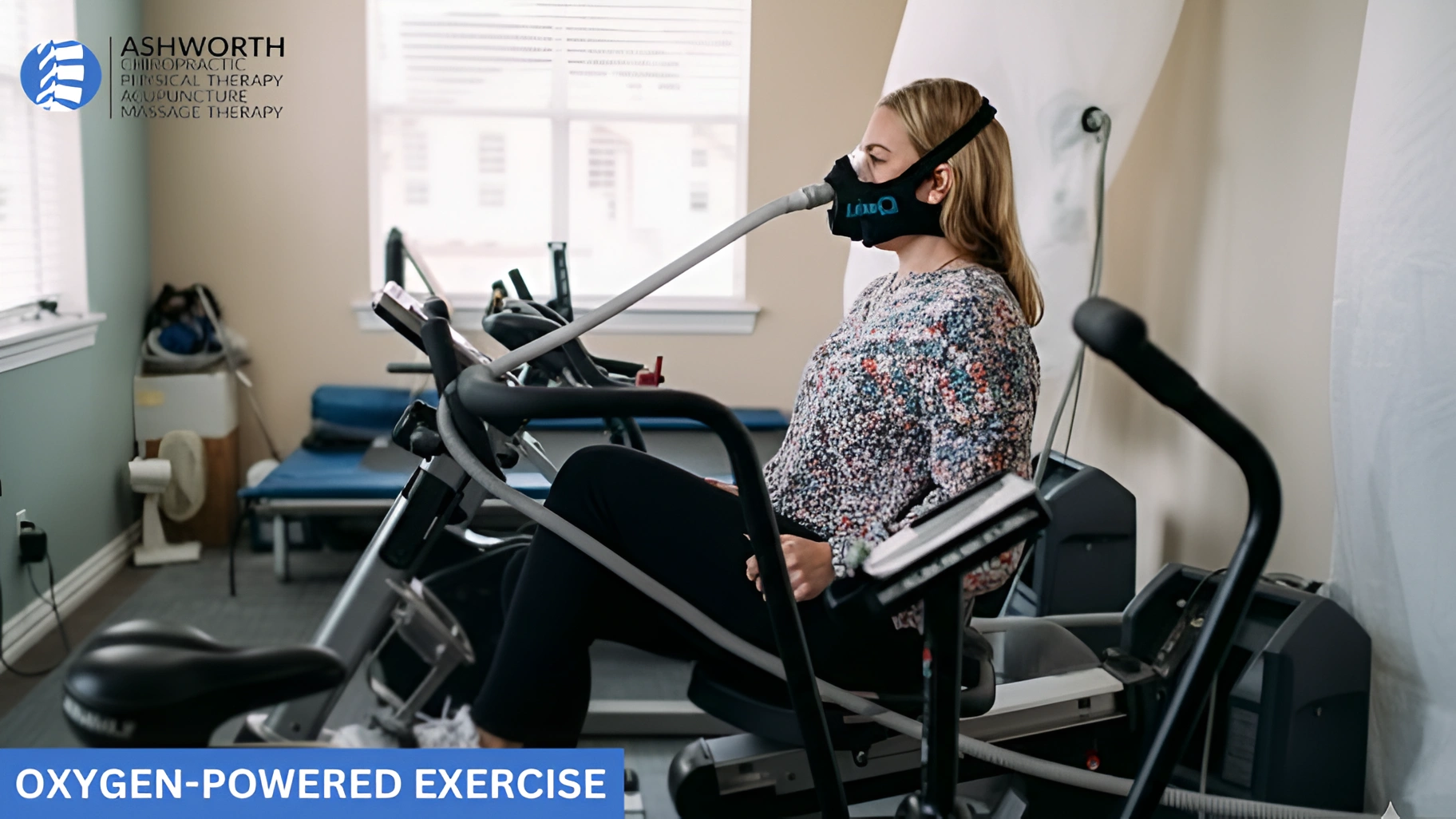
Exercise With Oxygen Therapy (EWOT) is a supervised approach that pairs physical movement with the use of concentrated oxygen, delivered through a mask connected to an oxygen-concentrating system.
During EWOT, oxygen levels typically range from 94–98% (sometimes cited as 92–97%), which is significantly higher than the approximately 21% oxygen found in normal atmospheric air.
By increasing oxygen intake while the heart rate is elevated through exercise, EWOT is designed to enhance oxygen delivery throughout the body, helping support cellular energy production, improve circulation, and promote recovery.
Key points to understand about EWOT include:
What this article covers:
Oxygen Delivery During Exercise
Once concentrated oxygen is inhaled during EWOT, exercise-driven circulation determines how that oxygen is distributed throughout the body.
Physical movement increases cardiac output, allowing oxygen-rich blood to move more efficiently through the vascular system and reach tissues with higher metabolic demands. This active circulation is what differentiates EWOT from passive oxygen therapies.
As blood flow increases, oxygen is delivered more effectively through both large vessels and smaller capillaries, improving tissue-level oxygen availability during movement.
According to educational resources from EWOT Energy, combining exercise with concentrated oxygen is designed to optimize oxygen distribution by using the heart and circulatory system during active movement.
Key mechanisms at work:
For more detail on these mechanisms, see the EWOT science overview from EWOT Energy.
Why Heart Rate Matters
Increasing heart rate is critical during EWOT because the heart functions as the primary pump that moves oxygen-rich blood throughout the body. As heart rate rises, blood is driven more forcefully to organs and tissues that are often under-oxygenated during rest.
These tissues typically receive enough oxygen to survive, but not enough to fully support higher metabolic activity.
Adequate oxygen delivery is required for tissues to engage their full energy cycles—processes necessary for cell turnover and regeneration.
By elevating heart rate through controlled exercise, EWOT helps push oxygenated blood into these areas, supporting the physiological conditions needed for ongoing tissue maintenance and repair.
Cellular Energy, Repair & Waste Removal
At the cellular level, oxygen plays a central role in supporting ATP (adenosine triphosphate) production, which is the primary process cells use to generate and manage usable energy. When oxygen availability is sufficient, cells can generate energy more efficiently and sustain normal function.
Oxygen availability also supports the body’s natural process of programmed cell turnover, allowing older or damaged cells to be cleared and replaced as part of normal tissue maintenance.
When oxygen delivery is limited, tissue function can become stagnant. Cells may struggle to repair themselves, and metabolic waste products—such as toxins, carbon dioxide, and lactic acid—can accumulate within tissues. Improved oxygen availability supports detoxification and waste removal, helping restore healthier cellular conditions and overall tissue balance.
According to information from PhysMed Columbus, EWOT is used in rehabilitation and wellness settings to support oxygen delivery, cellular energy production, and metabolic waste clearance during active movement.
Potential Benefits of Exercise With Oxygen Therapy
The following benefits are described as potential or observed outcomes based on clinical use and wellness applications. Individual responses may vary.
Energy Production & Fatigue Support
Because oxygen is essential for efficient ATP (adenosine triphosphate) production, increased oxygen availability during EWOT may support faster and more efficient energy generation at the cellular level.
When oxygen supply is adequate, cells can produce energy with less metabolic strain, which may contribute to improved overall energy efficiency. Oxygen availability also supports apoptosis, the process by which inefficient or damaged cells are removed, allowing healthier cells to function more effectively.
Clinicians such as Dr. David Schiller have noted that EWOT is often used to support energy levels in individuals experiencing fatigue or reduced exercise tolerance, particularly when conventional activity feels overly taxing.
Wellness-focused providers also report that EWOT may be helpful for individuals dealing with intermittent fatigue, including post-exertion tiredness after physical events, demanding schedules, or disrupted sleep patterns.
As a result, EWOT is commonly explored as a supportive therapy for:
- Chronic fatigue and chronic illness–related low energy
- Age-related declines in stamina
- Intermittent fatigue, including menstrual-cycle–related fatigue
- Athletic training demands and post-exertion recovery
Circulation & Cardiovascular Support
Exercise With Oxygen Therapy may help support circulation by affecting how blood vessels respond during activity, including processes that allow vessels to relax and widen, which can promote smoother blood flow through the circulatory system.
As blood vessels relax and widen, blood can move more freely through the circulatory system, improving overall blood flow. During exercise, oxygen-rich blood is pushed through both large vessels and smaller capillaries, helping improve oxygen delivery at the tissue level.
Improved capillary blood flow may contribute to better circulation in the extremities and more efficient delivery of oxygen and nutrients to working tissues.
In some individuals, this enhanced circulation is associated with improved cardiovascular efficiency and may support healthier blood pressure responses, though results vary based on individual health status.
Enhanced nutrient and oxygen delivery can also support faster recovery from physical strain or injury by supplying tissues with the resources needed for repair.
Endurance, Performance & Recovery
By improving how efficiently oxygen is delivered and used during physical activity, EWOT may allow muscles to sustain effort for longer periods with less perceived fatigue.
When working muscles receive adequate oxygen support, they are better able to meet energy demands during exercise, which can contribute to improved endurance and performance capacity.
Increased oxygen availability during movement may also support shorter recovery times following exertion. As metabolic byproducts are cleared more efficiently, muscles may experience less lingering fatigue after activity.
For this reason, EWOT is commonly explored as a supportive tool for athletes looking to enhance training capacity, as well as rehabilitation patients who need to rebuild strength and stamina without excessive strain.
Detoxification & Inflammation Support
During physical activity, metabolic waste products such as lactic acid and carbon dioxide naturally accumulate within tissues. When these byproducts are not cleared efficiently, they can contribute to muscle soreness, fatigue, and inflammation.
Improved oxygen availability during EWOT may help accelerate the removal of these waste products by supporting more effective circulation and cellular metabolism.
As waste clearance improves, individuals may experience reduced muscle soreness, lower fatigue levels, and decreased inflammatory stress following activity.
Over time, improved detoxification may also help reduce overall toxin buildup, which is often associated with chronic inflammation and increased immune system strain.
Immune Function Support
Proper oxygen support contributes to immune system regulation by helping maintain the function of immune cells, including T lymphocytes and natural killer (NK) cells, which are involved in immune surveillance.
In clinical and wellness settings, EWOT has been observed as a supportive therapy that may help strengthen immune response when used consistently over time.
Some providers report that improvements in immune markers may be observed over a period of approximately eight weeks, though individual responses vary.
Enhanced immune efficiency may contribute to improved infection resistance and faster recovery, making EWOT a supportive consideration for individuals managing chronic infections or conditions associated with low immune function.
Who May Be a Good Candidate for EWOT
Exercise With Oxygen Therapy is used as a supportive, adjunctive approach in a variety of clinical and wellness settings.
Rather than targeting specific diagnoses in isolation, EWOT is often considered based on how an individual’s body responds to physical exertion, oxygen demand, and recovery stress.
The following groups represent common scenarios in which EWOT may be explored as part of a broader care plan.
Respiratory & Cardiovascular Conditions
People managing chronic breathing-related conditions, such as COPD, and other breathing-related disorders, may experience limitations in oxygen uptake and tolerance for physical activity.
When used under supervision, EWOT may help support oxygen saturation, lung capacity, and exercise tolerance, which can contribute to reduced sensations of shortness of breath during movement.
EWOT is also explored in individuals with cardiovascular concerns, such as hypertension or heart disease, where circulation efficiency plays a key role in physical performance and recovery. By supporting improved blood flow during controlled exercise, EWOT may help reduce overall cardiac workload and promote more efficient circulation.
In some cases, improved vascular response during activity is associated with healthier blood pressure regulation, though outcomes vary based on individual health status and medical oversight.
Fatigue, Pain & Autoimmune Conditions
EWOT is commonly considered by individuals managing chronic fatigue syndrome or persistent low-energy states, particularly when fatigue limits the ability to exercise effectively.
It may also be relevant in cases of acute fatigue, where short-term recovery is the primary goal, versus chronic fatigue, where longer-term support may be needed to gradually rebuild tolerance and stamina.
In people with autoimmune and chronic pain conditions, such as rheumatoid arthritis and fibromyalgia, EWOT is often explored as a supportive therapy alongside other treatments.
Improved oxygen availability during movement may help support reduced pain, lower inflammatory stress, and improved energy levels.
Some individuals also report benefits related to mental clarity, including a reduction in brain fog, which can be a common challenge in autoimmune and fatigue-related conditions.
Neurological Conditions
EWOT is sometimes explored as a supportive therapy for individuals with neurological conditions where circulation and oxygen delivery to nerve tissue may be compromised.
This may include neurological conditions like multiple sclerosis (MS) and different types of neuropathy, which can influence nerve health, movement, and physical stamina.
By supporting improved oxygen availability during controlled movement, EWOT may help enhance oxygen supply to nerve tissue and promote better blood flow to the extremities.
In clinical and wellness settings, this improved circulation is associated with potential benefits related to mobility, fatigue management, and cognitive function, particularly when EWOT is used alongside other therapies as part of a broader care plan.
Metabolic, Aging & Cognitive Health
EWOT may also be considered by individuals with metabolic concerns, including diabetes or insulin resistance, particularly when factors such as limited exercise tolerance or circulation challenges make physical activity more difficult.
By making physical activity feel more manageable, EWOT may support improved exercise tolerance and help promote healthier insulin sensitivity over time. These effects can play a role in reducing the risk of common complications, including neuropathy and poor circulation, when combined with appropriate medical care and lifestyle strategies.
Among older adults, EWOT is sometimes considered as a supportive approach for maintaining cognitive function and physical mobility as part of an active aging strategy. Improved oxygen delivery during movement may help enhance brain oxygenation, which is associated with better memory performance and cognitive function in some individuals.
Over time, this support may contribute to slower mental decline, improved physical mobility, and greater overall functional independence as part of an active aging approach.
Athletic Training & Recovery
EWOT is frequently explored by individuals looking to support training capacity and recovery without placing excessive strain on the body.
By supporting oxygen availability during movement, EWOT may allow some individuals to achieve higher performance with less perceived effort, particularly during sustained or high-intensity activity.
Potential applications in athletic and conditioning settings include:
- Faster recovery following workouts or competitions
- Reduced lactic acid buildup, which may contribute to less post-exercise soreness
- Improved tolerance for repeated training sessions
EWOT is often considered by athletes involved in:
- Endurance sports, such as cycling and running, where sustained oxygen demand is high
- High heart-rate sports, including basketball, soccer, and swimming, which involve repeated bursts of intense activity
When used under supervision, EWOT may serve as a supportive tool alongside structured training and recovery programs.
Immune-Compromised & Specialized Conditions
EWOT is also explored in more specialized contexts where immune function or tissue healing may be compromised.
Individuals managing chronic infections or conditions associated with reduced immune efficiency, including HIV, may consider EWOT as a supportive approach aimed at reducing overall toxic load and promoting a more effective immune response.
In rehabilitation settings, EWOT has also been used as a supportive option for individuals with osteoradionecrosis, a condition involving tissue damage following radiation therapy.
In these cases, EWOT may help support:
- Improved blood flow to irradiated tissue
- Enhanced oxygen delivery to areas with reduced circulation
- Tissue regeneration during post-radiation recovery
Compared to hyperbaric oxygen therapy (HBOT), EWOT sessions are significantly shorter—often around 15 minutes versus 90 minutes—and rely on the heart as the pump to actively move oxygen-rich blood through affected tissues during exercise.
Is EWOT Safe? Risks & Considerations
Exercise With Oxygen Therapy is generally used under medical or clinical supervision, particularly because it combines physical exertion with elevated oxygen intake.
Proper oversight ensures that the therapy is tailored to the individual’s health status, fitness level, and tolerance for exercise.
During EWOT sessions, continuous monitoring is typically used to track physiological responses such as heart rate and oxygen saturation.
This allows providers to make real-time adjustments to exercise intensity or session duration to help maintain safety and comfort throughout the session.
Signs of overexertion that may require adjustment include:
If any of these symptoms occur, the session can be modified or paused to ensure the individual remains within a safe range.
It’s important to note that EWOT is not a replacement for medical treatment or prescribed care. Instead, it is commonly used as a supportive or adjunctive therapy alongside existing treatment plans.
Responses to EWOT can differ from person to person depending on health status, existing conditions, and how consistently the therapy is used, which is why individualized assessment and ongoing supervision are emphasized.
What to Expect During an EWOT Session
An EWOT session follows a guided, individualized format with ongoing oversight to support both safety and effectiveness.
While the experience is generally straightforward, each session is tailored to the individual’s health status, fitness level, and goals.
Initial Assessment
Prior to beginning EWOT, an initial assessment is conducted to determine whether the therapy is appropriate and how it should be customized. This process typically includes:
- A review of medical history, including current conditions and medications
- Condition-specific testing, which may involve:
- Cardiac assessments for individuals with cardiovascular concerns
- Lung function tests for those with respiratory conditions
- Candidate screening to ensure EWOT is a suitable option
This assessment helps establish a baseline and informs how the session will be customized.
Session Structure & Monitoring
During an EWOT session, exercise is performed while oxygen intake and physical response are continuously observed.
The focus is to maintain oxygen saturation levels close to 99% while keeping the individual within a safe and effective exertion range.
Monitoring commonly includes:
- Heart rate tracking to maintain a therapeutic heart-rate zone
- Oxygen saturation sensors to ensure adequate oxygen delivery
- Calorie tracking, which can help gauge effort and energy expenditure
This real-time monitoring allows providers to maintain balance between effectiveness and safety throughout the session.
Adjustments & Progression
EWOT is not a one-size-fits-all approach. Sessions are adjusted over time to reflect changes in fitness, tolerance, and goals.
Customization may include:
- Session duration adjustments, starting shorter and progressing as tolerated
- Frequency changes based on recovery and response
- Consideration of fitness level differences, such as:
- Higher-intensity needs for athletes
- Lower-intensity, gradual progression for older adults
- Goal-based progression, whether focused on performance, recovery, or general wellness
This adaptive approach helps ensure that EWOT remains appropriate and effective as the individual progresses.
EWOT as Part of a Comprehensive Treatment Plan
Exercise With Oxygen Therapy is most often used as a supportive component within a broader, individualized care strategy rather than as a standalone solution.
Its value is typically greatest when integrated with other therapies that address structural, functional, and metabolic aspects of health.
EWOT is commonly incorporated alongside:
- Chiropractic care, where improved circulation and oxygen support may complement joint mobility and nervous system function
- Physical therapy, helping individuals engage in movement and rehabilitation with greater tolerance and recovery support
- Functional medicine, where addressing oxygen utilization, inflammation, and metabolic stress aligns with whole-body treatment goals
This holistic approach allows care providers to address multiple contributing factors at once, rather than focusing on isolated symptoms.
By supporting movement under controlled conditions, EWOT may help address:
- Inflammation, by improving circulation and recovery capacity
- Poor circulation, particularly during physical activity
- Fitness limitations, especially in individuals who struggle with traditional exercise
When used as part of a comprehensive plan, EWOT supports a root-cause–focused strategy, helping individuals build capacity, resilience, and functional improvement over time while remaining aligned with their broader health goals.
Progress Tracking & Outcomes
Tracking progress is an important part of using EWOT effectively, as it helps ensure the therapy remains aligned with an individual’s goals, tolerance, and overall response. Rather than relying on a single outcome, progress is typically evaluated using a combination of symptom-based feedback and objective fitness markers.
Common symptom benchmarks may include:
- Pain reduction, particularly following activity or rehabilitation sessions
- Improvements in mobility, endurance, or ease of movement during daily tasks
In addition to subjective improvements, providers often monitor fitness-related markers to assess physiological response over time, such as:
- Heart rate patterns, including recovery and exertion response
- Oxygen saturation levels during activity
- Exercise tolerance, such as the ability to sustain activity with less fatigue
Based on these observations, EWOT programs are adjusted through dynamic plan updates. Session intensity, duration, or frequency may be modified to reflect progress or address plateaus.
This process of continuous reassessment helps ensure the therapy remains appropriate, safe, and responsive to the individual’s evolving needs.
Exercise With Oxygen Therapy (EWOT): Frequently Asked Questions
Schedule Your EWOT Evaluation
Getting started with Exercise With Oxygen Therapy begins with a personalized evaluation to ensure the approach is appropriate for your goals and health status.
The initial evaluation with Dr. Wilson typically takes about 30 minutes and includes a review of your health history, current concerns, and suitability for EWOT. If appropriate, the EWOT treatment session itself lasts approximately 15 minutes.
To ensure comfort and safety during your session, it’s recommended that you:
- Wear a T-shirt, shorts, and athletic shoes
- Plan to hydrate after the session, as sweating is common
- Bring a water bottle and a small towel
EWOT sessions are structured, supervised, and adjusted based on individual response, making the initial evaluation an important first step.
You can view availability and schedule your EWOT evaluation online using the clinic’s scheduling system at your convenience.