


Low Back Pain Treatment in West Des Moines
Low back pain is the leading cause of disability worldwide. It’s also one of the most overtreated, undertreated, and mismanaged conditions in primary care — depending on where you land in the healthcare system.
Most low back pain is mechanical in origin and responds well to conservative care. The challenge is that not all low back pain is the same, not all conservative care is equivalent, and the sequence of treatment matters as much as the treatment itself. Getting the right intervention at the right stage produces meaningfully better outcomes than applying a generic protocol.
At Ashworth Chiropractic in West Des Moines, low back pain is one of the most common presentations we see and one where the clinical approach — thorough evaluation, accurate staging, matched treatment — makes a consistent difference in how quickly patients recover and whether they stay recovered.
What we see and what we treat
Low back pain presentations we treat regularly include:
Acute mechanical back pain — sudden onset from a lift, a twist, or a movement that loaded the spine asymmetrically. Joint restriction, muscle guarding, and acute disc irritation are the most common drivers and can cause thoracic spine restrictions. Responds quickly to appropriate early intervention.
Lumbar disc herniation and radiculopathy — disc material compressing a nerve root and producing pain, numbness, or weakness into the leg. Often mismanaged by aggressive rest or premature surgical referral. The majority of disc herniations resolve with conservative care. Radicular pain into the leg warrants specific evaluation and technique selection — this is not a one-size-fits-all presentation.
Spinal stenosis — narrowing of the spinal canal or neural foramina, typically in adults over 50. Produces characteristic positional symptoms: pain with walking and standing, relief with sitting or forward flexion. Often managed well conservatively; surgical candidacy depends on severity and rate of progression.
Sacroiliac joint dysfunction — one of the most commonly missed contributors to low back pain. The SI joint is the largest joint in the body and a frequent source of pain that mimics lumbar disc or hip pathology. Responds well to specific manipulation and stabilization.
Lumbar restriction (segmental hypomobility) — joint restriction at one or more lumbar segments producing local pain, referred pain into the hip or thigh, and compensatory tension through the thoracolumbar fascia. The most common chiropractic presentation and one where the outcomes data is strongest.
Failed back surgery syndrome — persistent or recurrent pain following lumbar surgery. Epidural fibrosis, altered spinal mechanics, and adjacent segment degeneration are common contributors. Conservative care — including shockwave therapy for soft tissue components — can produce meaningful improvement even when the surgery was structurally successful.
Chronic low back pain — pain persisting beyond 12 weeks, often with secondary deconditioning, altered movement patterns, and central sensitization. Requires a more comprehensive approach combining manual care, rehabilitation, and in some cases functional medicine evaluation when inflammatory or metabolic contributors are present.
How we approach it
The evaluation at Ashworth includes a thorough history, orthopedic and neurological examination, and where relevant a PRI-based functional assessment — looking at breathing mechanics, lumbopelvic organization, and compensatory patterns that standard examination often misses. This is what changes the diagnosis when straightforward care hasn’t worked.
Treatment is matched to the finding and staged to the phase of healing:
- Chiropractic care — manipulation, mobilization, Cox Flexion-Distraction for disc presentations, SI joint-specific techniques
- Physical therapy — stabilization, directional preference exercise, functional movement rehabilitation
- Acupuncture — pain modulation, inflammatory regulation, useful adjunct in acute and chronic presentations
- Shockwave therapy (ESWT) — for soft tissue components, trigger points, and post-surgical scar tissue
- Massage therapy — soft tissue preparation and adjunct to manual care
We don’t pre-set treatment packages before evaluating the patient. We assess, treat, and discharge when the problem is resolved. Our average across all musculoskeletal conditions is 6.3 visits to resolution.
The Back Pain Series
Low back pain is one of the topics where patients deserve a thorough, honest explanation — not a brochure. We’ve written a four-part series covering the most common questions and decisions patients face.
Part 1: What Is the Best Non-Surgical Treatment for Back Pain?
The evidence on conservative care for back pain has shifted meaningfully in the last decade — away from rest and imaging-first approaches, toward early active care matched to the stage of the injury. This article covers what the research actually shows for acute, subacute, and chronic presentations, and why the timing of treatment matters as much as the treatment itself.
Part 2: What Type of Back Pain Do You Have?
Disc herniation, spinal stenosis, pars fracture, and lumbar osteoarthritis look similar from the outside but respond differently to care. This article explains how to distinguish between them, what imaging does and doesn’t tell you, and what conservative care looks like for each.
Part 3: You Need Back Surgery — Now What?
If surgery is the right next step, what you do before the procedure matters as much as what you do after. Research consistently shows that patients who are better conditioned going into back surgery recover faster, spend less time in rehabilitation, and report better long-term outcomes. This article covers prehabilitation, what to ask your surgeon, and how to give yourself the best possible chance of a good result.
Part 4: My Back Still Hurts After Surgery — What Do I Do Now?
Failed back surgery syndrome is one of the most underserved situations in musculoskeletal medicine. If surgery didn’t provide the relief you expected, the answer isn’t necessarily more surgery. This article covers why post-surgical pain persists, what conservative care can accomplish after the procedure, and what the evaluation should look for.
Get evaluated in West Des Moines
Ashworth Chiropractic is located at 5504 Ashworth Rd, West Des Moines, IA 50266. No referral needed. We see patients from across the Des Moines metro — West Des Moines, Waukee, Clive, Urbandale, Johnston, and surrounding areas.
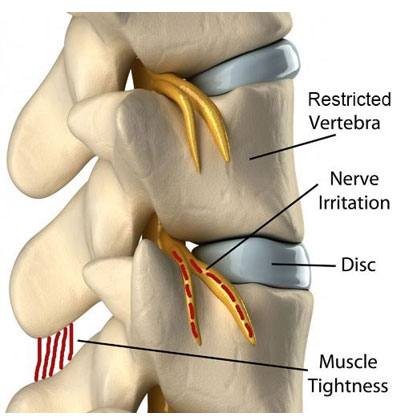
Image on this page provided by ChiroUp.
Coordinated Care, Under One Roof
Chiropractic, physical therapy, acupuncture, and massage therapy are coordinated under one roof with the rest of your treatment plan rather than operating in isolation. Schedule your appointment to get started.