

What is Shockwave Therapy?
By Dr. Matthew Wilson, DC, FIACA | Ashworth Chiropractic, Physical Therapy & Acupuncture | West Des Moines, Iowa
We’ve been practicing physical medicine in West Des Moines for a long time. And in that time, very few technologies have genuinely impressed us enough to add them to what we offer. Shockwave therapy is one of them.
We recently added Extracorporeal Shockwave Therapy — ESWT — to our clinic, and we want to take a few minutes to explain exactly what it is, how it works, and whether it might be right for you. No hype. Just honest answers.
So What Exactly Is Shockwave Therapy?
Despite the name, shockwave therapy has nothing to do with electric shocks. We hear that concern a lot, and we want to put it to rest right away.
ESWT uses high-energy acoustic sound waves — similar in concept to the ultrasound waves used in medicine for decades — and delivers them precisely to injured or degenerative tissue in the body. These waves create a mechanical stimulus at the cellular level that triggers your body’s own healing response.
Think of it like this: sometimes tissue that has been injured, inflamed, or simply worn down over time gets “stuck” in a state where it stops healing on its own. Calcifications form. Scar tissue builds up. Blood flow diminishes. The tissue becomes what clinicians call chronic — and chronic tissue often doesn’t respond to stretching, strengthening, or even manual therapy alone.
Shockwave breaks that cycle.
💡 Key fact: ESWT stimulates the body’s natural repair process — it does not introduce anything foreign into your body. No needles, no drugs, no surgery.
The Device We Chose — and Why It Matters
Not all shockwave devices are created equal. When we made the decision to add ESWT to our clinic, we spent considerable time evaluating the options on the market. We chose the Storz Medical Duolith SD1 Ultra — and we did not make that decision lightly.
Storz Medical is widely regarded as the gold standard in shockwave technology. Their devices are the most extensively studied in the clinical literature, used in major hospital systems and sports medicine facilities around the world, and trusted by practitioners who need results — not marketing. The Duolith SD1 Ultra is their flagship focused shockwave platform, and it represents a meaningful step above the radial (pressure wave) devices that are more commonly found in chiropractic and PT offices.
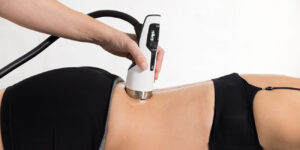
Focused vs. Radial Shockwave — What’s the Difference?
Most shockwave devices used in outpatient clinics produce what is called radial shockwave — pressure waves that spread outward from the applicator tip in a cone shape, dispersing energy across a broad surface area. Radial shockwave is effective for superficial tissue and general pain modulation, and it has its place. But it has limitations in terms of depth and precision.
The Duolith SD1 Ultra uses the Sepia focused handpiece, which delivers true focused shockwave — energy that converges to a precise focal point deep within the tissue rather than dispersing at the surface. This matters for several reasons:
- It can reach deeper tissue structures — tendons, bursae, and tissue at depth that radial devices simply cannot access effectively
- The energy is concentrated precisely where the problem is — not scattered across surrounding tissue
- Clinical outcomes are stronger — meaning more conditions can be treated effectively, and patients typically need fewer visits to achieve lasting results
- It is the technology used in the highest-level clinical research and the same platform trusted by elite sports medicine programs
That last point connects directly to our philosophy here at Ashworth: we are not interested in keeping you coming back indefinitely. We want to get you better in as few visits as possible and give you the tools to stay that way. The Sepia focused handpiece on the Duolith SD1 Ultra is the shockwave technology most consistent with that goal.
How Does It Work?
When the shockwave applicator is applied to the target area, the acoustic waves do several things simultaneously:
- Increase local blood flow and circulation to the tissue
- Break down calcifications and chronic scar tissue that are restricting movement or causing pain
- Stimulate collagen production — the building block of tendons, ligaments, and connective tissue
- Reduce substance P, a neuropeptide involved in pain signaling — which is why many patients notice pain relief quickly
- Trigger stem cell activation in the tissue, supporting regeneration at a cellular level
In plain terms: shockwave wakes up tissue that has stopped healing and gives it the biological signal it needs to repair itself. It’s not masking the problem — it’s addressing the underlying cause of why the tissue isn’t recovering.
Does It Hurt?
This is the question we get most often, and the honest answer is: it depends on the area and the intensity, but most patients describe it as a strong pressure sensation rather than pain — and most find it very tolerable.
Sessions are typically 5 to 15 minutes. There is no downtime. Most patients walk out of the office and go about their day normally. Some notice mild soreness in the treated area for 24–48 hours afterward — which is actually a sign the healing process has been activated — similar to how your muscles feel after a good workout.
We calibrate the intensity to each patient individually. We are not trying to make you uncomfortable — we are trying to get you results.
★ Most patients complete 3 to 6 sessions spaced 1–2 weeks apart. Sessions are 5–15 minutes. No anesthesia. No recovery time. No injections.
Who Is a Good Candidate for Shockwave Therapy?
Shockwave therapy tends to work exceptionally well for conditions involving tendons, ligaments, and connective tissue — especially chronic issues that have not responded adequately to other treatments. If you have been dealing with a nagging injury for months or years and feel like you’ve tried everything, ESWT may be exactly what was missing.
It also works very well as part of a comprehensive care plan — combined with chiropractic, physical therapy, or other treatments we offer — to accelerate results and reduce the total number of visits you need.
Common presentations that respond well to shockwave therapy include:
- Plantar fasciitis and chronic heel pain
- Achilles tendonitis and tendinopathy
- Tennis elbow (lateral epicondylitis) and golfer’s elbow
- Calcific shoulder / calcific tendinitis of the rotator cuff
- Patellar tendinopathy (jumper’s knee)
- Hip pain including greater trochanteric bursitis
- Chronic muscle tightness and trigger points that don’t release with manual therapy
- Non-healing soft tissue injuries
We also use ESWT in specific wound care applications and for certain musculoskeletal conditions in older adults who are not surgical candidates — there are certain requirements involved with your family physician so please call ahead to find out if it is right for you.
Who May NOT Be a Good Candidate?
Shockwave therapy is very safe, but it is not appropriate for everyone. We will always do a thorough evaluation before recommending it. Generally, ESWT is not indicated for:
- Patients who are pregnant
- Patients with blood clotting disorders or who are on certain blood thinners
- Areas with active infection, open wounds, or malignancy
- Children and adolescents with open growth plates in the treatment area
- Patients with a pacemaker (in certain treatment areas)
This is exactly why we do not offer shockwave as a standalone walk-in service. Every patient who receives ESWT at Ashworth has been evaluated first. We want to make sure it’s the right tool for your specific situation — and that we’re applying it in the right way.
Is It Covered by Insurance?
This is a fair and important question. Currently, most insurance carriers in the United States do not cover ESWT, and we want to be upfront about that rather than surprise you at checkout.
That said, the per-session cost is very reasonable — and when you consider that shockwave therapy often resolves conditions in 3 to 6 sessions that patients have been managing for years with other approaches, the value is significant. We are happy to discuss cost and payment options when you call.
How Is This Different From Ultrasound Therapy?
We get this question too, because both involve sound waves. The key difference is energy intensity. Therapeutic ultrasound operates at a very low energy level and primarily generates heat in tissue. Shockwave therapy operates at a much higher energy level and creates a true mechanical stimulus that triggers biological change at the cellular level. They are fundamentally different mechanisms — and shockwave produces significantly more robust clinical outcomes for the conditions it targets.
What to Expect at Your First Appointment
If you come in to discuss whether shockwave therapy is right for you, here is what the process looks like:
- We start with a thorough evaluation of your condition, history, and goals
- We confirm that ESWT is appropriate and explain what we recommend
- If you proceed, your first session happens the same day or at your next appointment
- Sessions are short — typically 5 to 15 minutes for the shockwave portion
- We combine shockwave with other appropriate care as part of your individualized plan
- Most patients are scheduled for 3 to 6 sessions and evaluated after each one
There is no pressure. There are no packages to purchase upfront. That is not how we operate. You will always know exactly what we recommend and why before we proceed.
What’s Coming Next: Shockwave + Laser Therapy
One of the things we are most excited about is combining shockwave therapy with our existing red light and low-level laser therapy — two regenerative technologies working in sequence to create what we believe is the most powerful soft tissue healing protocol we have ever offered.
Shockwave initiates the repair signal. Laser therapy amplifies the healing response and reduces inflammation. Together, they create a synergy that neither technology achieves as effectively on its own.
We will be publishing more on the shockwave and laser combination protocol shortly. If this is something you are interested in, mention it when you call.
About the Author
Dr. Matthew Wilson, DC, FIACA, CCWP is the owner and lead clinician at Ashworth Chiropractic, Physical Therapy & Acupuncture in West Des Moines, Iowa. He is a Palmer College of Chiropractic honors graduate with advanced certifications in Graston Technique, Postural Restoration, functional medicine, acupuncture, laser therapy, and dry needling. He has been serving the West Des Moines community since 2009.