

Does Red Light Therapy Actually Work for Back Pain? A New Sham-Controlled Trial Says Yes — With a Catch
Most of what you’ll read about red light therapy online falls into one of two categories: a company selling you a $400 panel and promising it’ll fix everything from your back to your skin to your sleep, or a skeptic dismissing the whole category as expensive placebo. Neither one is being straight with you, and until recently, the research didn’t give either side much to stand on — most of the studies were small, open-label, and easy to shrug off.
A study published in Lasers in Medical Science changes that, at least for one specific question: does red and infrared LED light actually help chronic low back pain, or does it just feel like it’s helping because you’re doing something about your pain twice a day? The researchers built a trial specifically to answer that, and the answer is more interesting than either the marketing or the skepticism gives it credit for.
What Made This Study Different
176 patients with chronic, non-specific low back pain were split into two groups across three hospitals. One group got a real LED device — 630nm and 850nm wavelengths, the combination most photobiomodulation research points to — paired with rehabilitation exercises. The other group got a sham device that looked and felt identical but delivered a fraction of the light output, paired with the same rehab program.
That’s the part that matters. This wasn’t a study comparing “light therapy” to “nothing.” It was built to isolate whether the light itself was doing anything beyond the placebo effect of a daily ritual, a warm sensation on your back, and the expectation that treatment is working. Most of what circulates about red light therapy — including a lot of what clinics and device companies cite — doesn’t control for that. This one did.
Both groups did two 20-minute sessions a day, at home, for 28 days.
What They Found
The real device group came out clearly ahead, and not by a small margin:
- 80.9% effectiveness rate in the real-light group vs. 27.6% in the sham group (p<0.0001 — a statistically decisive difference, not noise)
- Pain scores (VAS) improved by a gap of about 2 points between groups — well past the 1.5-point threshold researchers consider clinically meaningful, not just statistically significant
- Function scores (Japanese Orthopaedic Association scale) improved more in the real-light group as well
- Patient satisfaction: 97.7% in the real-light group vs. 58.6% in the sham group
- No serious adverse events in either group
That satisfaction number in the sham group is worth sitting with for a second. Even a fake device, paired with real rehab and daily attention, got 58.6% of patients to report satisfaction. That’s the placebo and ritual effect doing real work — and it’s exactly why a sham-controlled design was the right way to test this. It’s also exactly why we’d rather point you to a trial built this way than to the testimonial-driven claims most of this category runs on.
What the Study Doesn’t Prove
We’re not going to leave this part out, because leaving it out is the move that got the field’s reputation into the ditch in the first place.
The trial followed patients for 28 days — we don’t know yet whether the benefit holds at three months, six months, or a year. The clinicians running the sessions knew which device was real, which opens the door to detection bias even if patients didn’t know. And the researchers didn’t track objective inflammatory markers, so we’re relying on reported pain and function scores rather than a measurable tissue-level explanation for why it worked.
None of that erases the result. An 80.9% vs. 27.6% split, with a p-value that low, across nearly 200 patients, is a real signal. It just means “promising, well-designed early trial” is the honest description — not “proven cure,” which is the sentence every red-light-panel ad on your Instagram feed is currently writing for you.
Why We’re Telling You This Instead of Just Advertising It
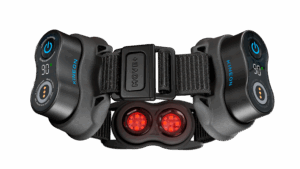
We’ve had laser/red-light units in this clinic for a while, and it doesn’t get much airtime in our content — mostly because we don’t lead with the treatments that sound the most impressive. We lead with what actually moves the needle for a given diagnosis, and light therapy has always been positioned here as what it is: a low-risk adjunct that speeds recovery alongside real treatment, not a stand-alone fix for a mechanical problem.
That’s not a new position for us. It’s the same hierarchy we apply to everything — least invasive, quickest path to resolution, least expensive, tried first, escalate only when the evidence says to. Red light therapy sits near the bottom of the invasiveness scale, which is exactly why it’s useful as an add-on and exactly why we’d never sell it as your whole treatment plan for low back pain or neck pain that actually needs to be diagnosed and addressed directly — two of the conditions we see this requested for most.
How We Actually Layer It In — Alongside Chiropractic, PT, and Shockwave
This is the part the study can’t tell you, because the study was testing light therapy against a sham device, not testing it as one piece of a broader plan of care. Here’s what that actually looks like in this building:
With chiropractic adjustments. After a session, we’ll sometimes use light directly over the segment we just adjusted — not to fix the restriction (the adjustment already did that work), but to take the edge off post-adjustment soreness so the tissue settles into its new position with less irritation over the following day or two. It’s aftercare, not the intervention.
With physical therapy. This is where it shows up before treatment more than after. If a patient is too guarded or locked up to move well, 10–15 minutes of light ahead of a session can take enough edge off that they can actually perform the exercise with correct form — which matters, because a rehab movement done wrong to avoid pain doesn’t build the pattern we’re trying to build. Kelly uses it selectively, when it serves that specific purpose, not as a blanket add-on to every visit.
With shockwave therapy. This is the one with an actual rule attached — the 48-hour hold we mentioned above. ESWT works partly by deliberately provoking a controlled inflammatory response in the tissue, and running light therapy (or NSAIDs, or ice) too close to that session can blunt the exact response the shockwave is trying to trigger. Once that window has closed, light therapy is a reasonable way to help manage the soreness ESWT often causes in the days that follow.
The pattern across all three: on its own, this study is a real, honest yes — red light therapy outperforms a sham device for chronic low back pain, plainly and by a wide margin. Layered into an actual plan of care, where a specific intervention is addressing the mechanical problem and light therapy is supporting recovery around it, is where it earns its keep. That’s the difference between a $400 panel doing its best alone in your living room and the same technology used with intent, next to treatment that’s actually built around your diagnosis.
What This Means If You’re Dealing With Chronic Low Back Pain
If you’ve been eyeing a red-light panel online, or if a clinic somewhere has offered you laser therapy and you weren’t sure whether it was legitimate or a nice-sounding add-on to pad the bill, here’s the honest read: the evidence now supports it as a real, low-risk tool for chronic low back pain — when it’s paired with actual rehabilitation work, the way this study did it, not used in isolation.
What it doesn’t do is replace the step that actually matters most: figuring out why your low back is the thing that keeps flaring. Across our own tracked outcomes — 4,443 patient reports, 80.8% average improvement, 6.3 average visits to resolution — the pattern holds regardless of which adjuncts we use: the visits that count are the ones spent correctly diagnosing what’s actually driving the pain. Light therapy can make those visits more comfortable and speed the healing process along the way. It’s not a substitute for them, and it’s priced accordingly — see what a laser session actually costs here.
If you’re weighing this on your own — at home with a panel, or through a clinic — the question worth asking isn’t “does red light therapy work.” This study is a reasonable yes, with real caveats. The better question is whether whoever’s recommending it to you has actually looked at what’s going on in your spine first, or whether it’s just the treatment they happen to sell.
Source: Clinical efficacy study of LED red and infrared light therapy for chronic non-specific low back pain, Lasers in Medical Science (2026).